

The Golden Hour: what Afghanistan taught me about accountability
Sixty minutes
I first came across the Golden Hour in pre-deployment training before Afghanistan. The idea was simple. Once a Marine or a soldier is shot, you need to get them onto an operating table within 60 minutes. Do that, and they have a reasonably good chance of survival. After an hour, mortality rises significantly.
It became a planning timeline that everyone in the military was aware of.
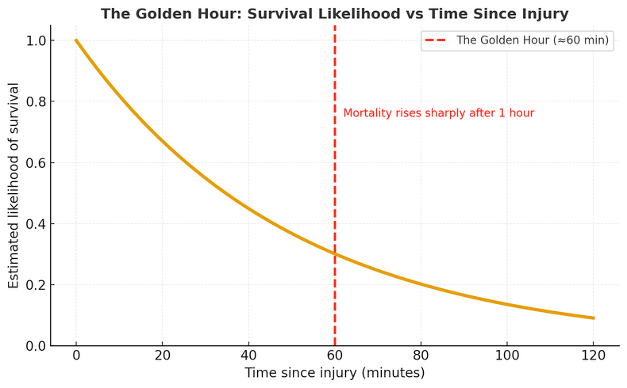
But the Golden Hour wasn’t really a target. It was a system.
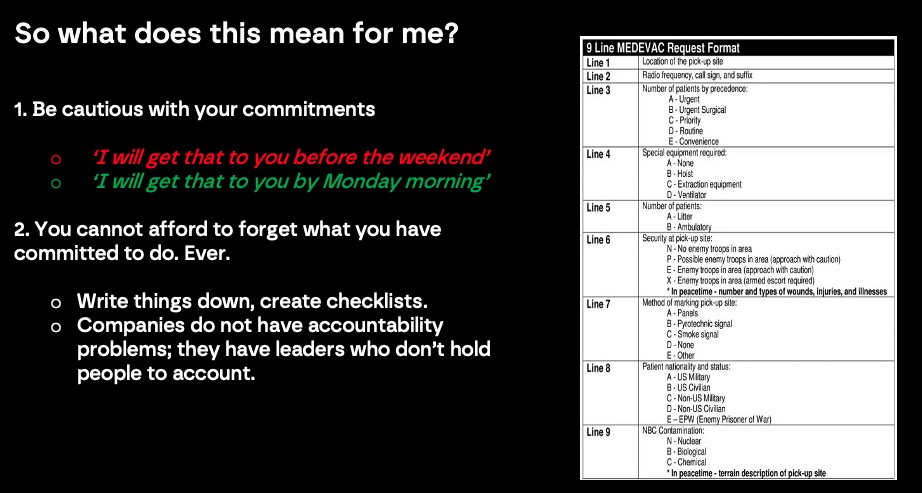
A Marine is shot. The troop sergeant sends a nine-liner, a checklist of information that tells the helicopter crew what they’re flying into. A gunshot wound to the abdomen is different from an IED blast, and they need to know which so they bring the right kit. As the helicopter comes in, the troops on the ground mark a safe landing site. The casualty is loaded, flown back to Camp Bastion, and needs to be on an operating table inside the hour. Then there’s an after-action review, and the system learns and resets.
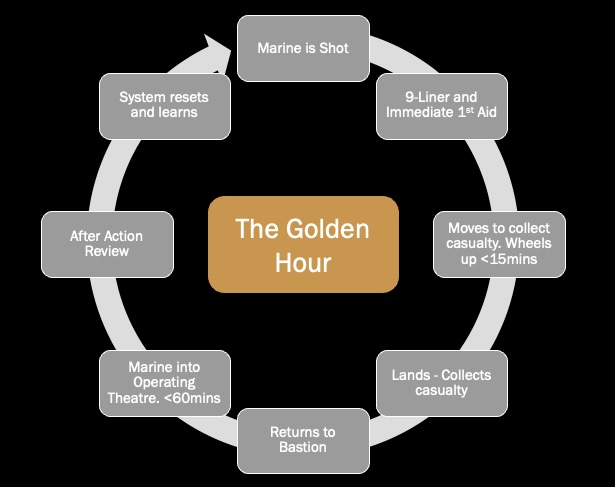
Set the next person up for success
What made it work was that everyone understood the part they played in the wider system.
If I sent the wrong information or the wrong grid, the helicopter wasn’t as prepared as it could be, or it landed in the wrong place. That could have disastrous consequences.
It went further than the radio call. If we patrolled out a long way, or used vehicles to push further, we stretched the time it would take the helicopter to reach us. My decisions were spending someone else’s time, and that could have significant consequences for the lives of my men.
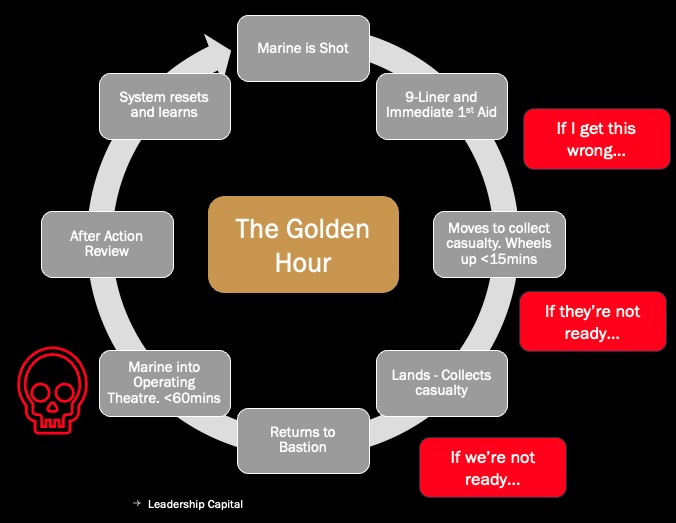
So what I understood about the Golden Hour was this: we needed to set the next person up for success. People need to understand the impact of their actions, and what the consequences of failure look like.
Intent, goal, system, individual
The way I describe it now has four levels.
- The intent: what are we trying to achieve, and why? In Afghanistan, save as many lives as possible.
- The goal: more constrained, time-bound and clear. An injured Marine on an operating table in under 60 minutes.
- The system: a series of interconnected processes and handovers.
- The individual: understand your part in the system and what you’re responsible for. Do your job, and set the next person up for success.
Where businesses fall down
In my experience, organisations aren’t bad at accountability in certain places: chasing a sale, delivering for customers. Where it falls down is inside the organisation, between functions. That’s where you hear people say, “Well, that’s not my responsibility.”
I saw this at a premium footwear brand chasing a nine-figure revenue target. The commercial team was incentivised to sell as much as possible, and they were recognised and rewarded for it.
What I learned about fashion is that it’s all about your ability to forecast demand accurately. This business didn’t do that well. Sales would put thousands of pairs of one colour into a single retailer when the forecast had been a fraction of that. Emergency production had to be bought in, in places where there were real risks around quality. It was much more expensive and much less profitable.
The quality problems damaged the business for the long term. Once you’ve sold someone a pair of boots and they fall apart at the ankle, as my wife’s did, they never buy from you again.
One part of the business was setting the other part up for failure rather than success. It was made harder because the business was running three seasons at once: selling this winter, preparing for next summer and forecasting the winter after. That needs a real cadence and discipline around which decisions get made by when.
I’ll be honest: I realised this relatively late. I was brought in by the chairman, almost as a last-ditch effort to close a revenue gap. It only became clear as we mapped out what their system looked like during the offsite. They couldn’t do it. The problem was bigger than a revenue gap. With hindsight, I wish I’d got involved sooner.
“But nobody dies in a portfolio company”
That’s true. But some of the best lessons about high performance and teamwork come from environments where the consequences of your actions are really significant. If you want to get better, you look at places where people have to work together to get a job done.
That isn’t so different from a portfolio company. Those people also have to make decisions on imperfect information to get a job done. The broken handovers just look different: not understanding what someone really wants and why, board papers that aren’t timely or accurate, information relayed badly, things forgotten.
What to do on Monday
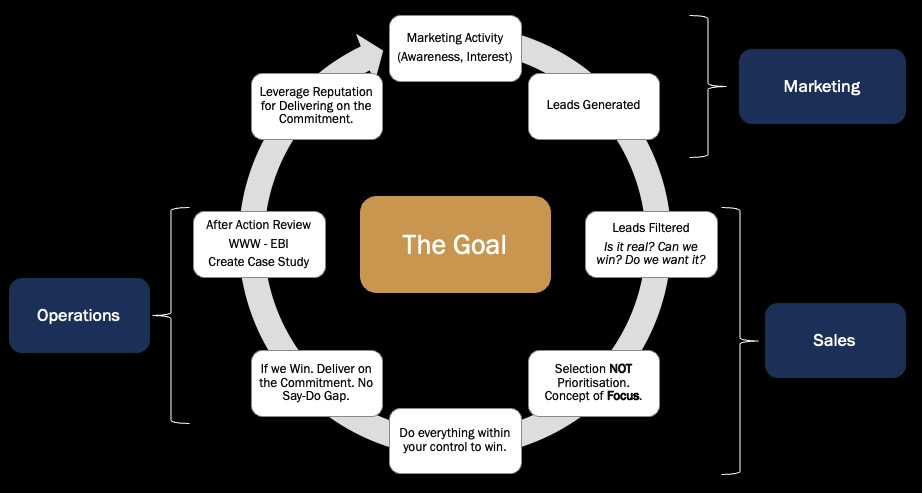
Ask yourself one question. Can you draw how your business works, simply enough to explain it to someone new to it? How does the firm make money, and how does it provide value to customers?
The physicist Richard Feynman once tried to prepare a lecture on a difficult idea for first-year students and couldn’t. As his colleague David Goodstein recalls, Feynman came back and said: “I couldn’t reduce it to the freshman level. That means we don’t really understand it.”
It can come across as basic. But the act of drawing something out shows you how well you really understand it. If you can’t draw your business as a system and explain it in simple terms, you probably don’t understand it, and you can’t hold anyone to account inside it.
Once it’s drawn, look at each handover and ask what the next person needs from you to succeed.
Accountability is a leadership job
Being accountable means doing what you say you will do. The gap between what you say and what you deliver is where trust is lost.
But the Golden Hour taught me that accountability isn’t something you demand from individuals in isolation. It comes from everyone understanding the intent, the goal, the system and their part in it.
Companies don’t have accountability problems. They have leaders who don’t hold people to account.
Share this article:

3 Tips for Effectively Communicating with Your Remote Workforce
If you’re in a leadership position at your company, you already know the value of having excellent communication skills—and how communication is essential for fostering your team’s productivity. Whether conveying important information to clients or disseminating tasks to internal teams, great communicators are able to share essential information while simultaneously inspiring and connecting with their…

Why do you need to check that standards are in place?
When I am struggling to think of something to write about, I normally find some inspiration from what’s happened over the past couple of weeks. In this short article, I am going to link the leadership behaviour of ‘checking standards’ to food poisoning… My wife and I decided to take a couple of nights away…

The OODA Loop: From the Battlefield to Business Success
The OODA Loop is one of the most valuable – yet poorly understood – theories that exists. This article is my attempt to explain what the ooda loop is by using examples from business, the military and sport to demonstrate how universally applicable it is. History has proven that favourites don’t always come out on…
